Arjun Bird Presents: The UT Southwestern Bird Rookery


Arjun Bird is not your typical 10-year-old. While most kids his age are focused on school and sports, Arjun has dedicated himself to the patient, observant world of wildlife photography. Having chosen the name “Arjun Bird” to reflect his deep connection to the avian world, he brings a unique, youthful perspective to the Dallas nature scene. His work at the UTSW Bird Rookery showcases a level of technical skill and biological understanding that rivals veteran naturalists, capturing the raw beauty of Dallas’s most hidden urban sanctuaries.

We love comments!  Please share your thoughs and click a smiley 🙂

This was filmed at the UT Southwestern (UTSWMC) Rookery @ 2000 Inwood Rd, Dallas, TX 75235.

Promise you’ll love what you see and will want to visit!

Don’t worry if you don’t see your comment right away. No need to re-write.  It will be approved in no time.

Click here for the Species Spotlight & Video Transcript

Dive Deeper: The Biology of the UTSW Rookery

Species Spotlight: The Great Egret (Ardea alba)

The stars of this video are the Great Egrets. During the 2026 nesting season at the UTSW Rookery, keep a lookout for these specific biological markers:

Breeding Plumes: Look for the long, lacy feathers on their backs called aigrettes. These were once so highly prized for fashion that the species was nearly hunted to extinction.

Neon Lores: Note the vibrant lime-green skin between the eyes and the bill. This color is only present during the height of the breeding season.

Nest Fidelity: These birds demonstrate remarkable loyalty to this specific location, returning to the same post oak trees at UT Southwestern year after year to rebuild.

Video Transcript: Arjun Bird Interview

Arjun Bird: “Most people don’t realize that right here in the middle of Dallas, there’s this incredible place where thousands of birds come to raise their families. I’ve been fascinated by birds since I was five, and coming to the UTSW Rookery is like stepping into a different world. You see the Great Egrets—they’re the first ones here—building these massive nests in the post oaks. My goal with my photography is to show people the beauty of these birds so they’ll want to protect places like this.”

Narrator: “Arjun’s patience is what sets him apart. He’ll stand for hours waiting for that perfect moment when a Great Egret displays its breeding plumage. It’s a reminder that even in a city of millions, nature is right here, if you’re quiet enough to look.”

 

You’ll love watching this FULL-SCREEN on a PC or TV screen.  It’s filmed in Gorgeous 4K and has lots of close-up sounds that bring it to life!

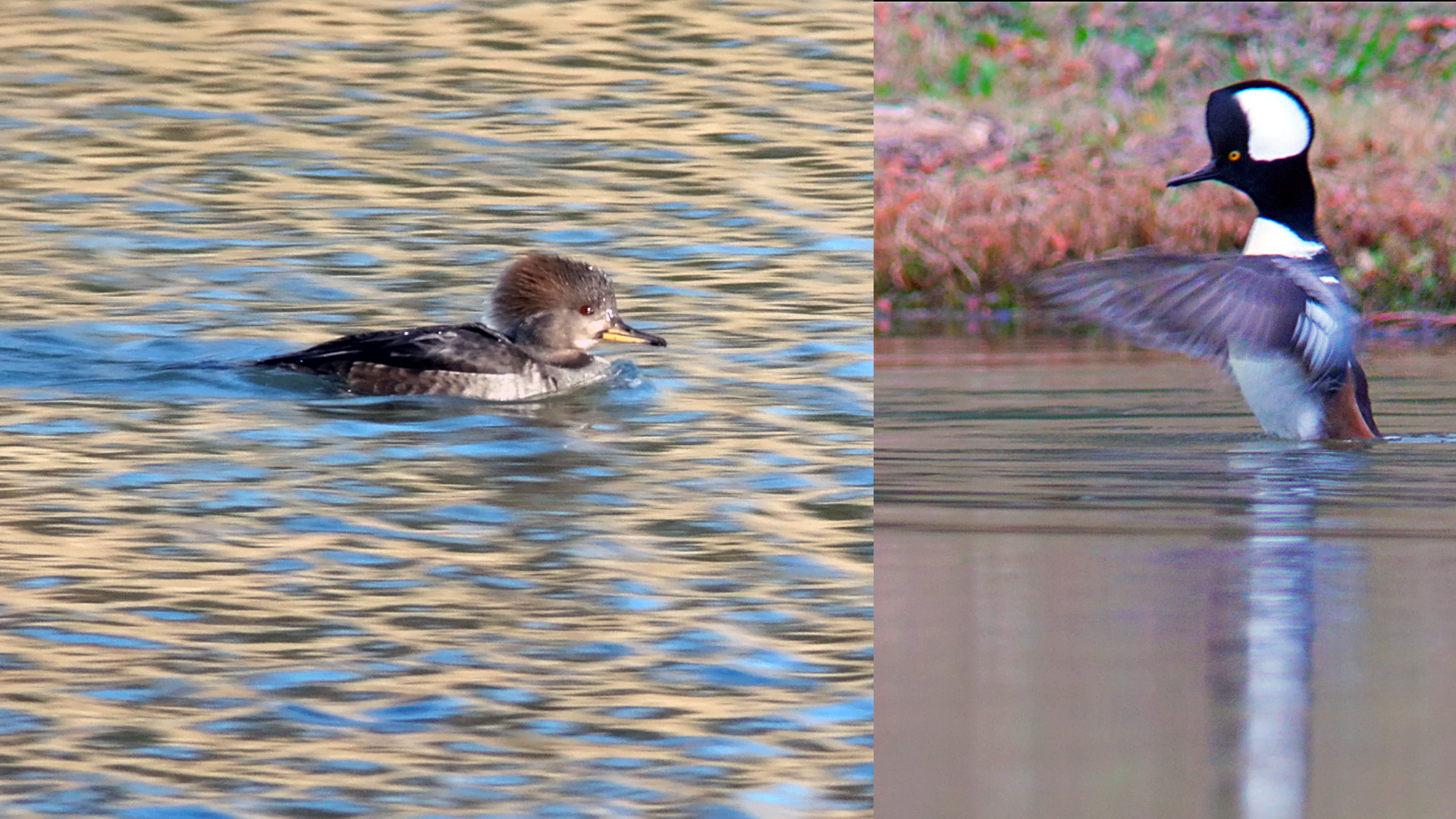
Think the Las Colinas canals don’t harbor much wildlife? Think again!  Join us on the canals of Las Colinas to discover the exotic winter waterfowl that visit the Dallas area. We’re breaking down the fascinating differences between diving ducks and dabbling ducks, featuring incredible close-up footage of the Hooded Merganser, Northern Shoveler, American Wigeon, and more!

Learn how to tell a diving duck from a dabbler, see their unique takeoff styles, and discover why the Hooded Merganser is the star of the show!

Read Full Transcript: Dallas Winter Wildlife: Exceptional Aquatic Birds (PDF)

Dallas Winter Wildlife: Exceptional Aquatic Birds
Explore the surprising winter waterfowl found along the canals of Las Colinas, Texas. Learn the key differences between diving ducks and dabbling ducks, featuring close-up footage of Hooded Mergansers, Northern Shovelers, Ring-necked Ducks, Lesser Scaups, and American Wigeons.
Video Thumbnail
2026-03-27T19:20:46-05:00
11:38
Dallas Nature Channel

DNC Logo

This was shot on a super hot day at Simpson Park in the Trinity Forest.  We couldn’t find anything, but right under our noses were these tiny guys!

They are fighting current to maintain their position.  The TelleTubby clouds are perfectly timed Cottonwood fluff that just happened through 🙂


What if some of the most complex and beautiful life forms in North Texas were hiding in plain sight right under your feet? In this flagship episode of the Dallas Nature Channel, we venture to the Southwest Nature Preserve in Arlington to explore the vibrant, alien-like world of lichens. From the “Golden Eye” to the “Stonewall Rim,” discover why these organisms are much more than just “spots on a rock.”

We are honored to be joined by Dr. Manuela Dal Forno, a leading voice in lichenology currently with the Botanical Research Institute of Texas (BRIT). With a Ph.D. and a postdoctoral fellowship from the Smithsonian National Museum of Natural History, Dr. Dal Forno brings world-class academic insight to the DFW landscape. Watch as she breaks down the three main growth forms—Foliose, Fruticose, and Crustose—and explains the fascinating “sunscreen” chemistry that allows lichens to survive the harsh Texas sun.

Filmed in stunning 4K, this video is designed for North Texas hikers, master naturalists, and curious explorers alike. Whether you are walking the trails at Southwest Nature Preserve or exploring your own backyard in Dallas or Fort Worth, you will never look at a sandstone boulder the same way again. Grab your hand lens and join us for a deep dive into the resilient beauty of DFW’s lichens.

Read Transcript Summary: The Lichens of DFW with Dr. Manuela Dal Forno (PDF)

The Lichens of DFW with Dr. Manuela Dal Forno
Join world-renowned lichenologist Dr. Manuela Dal Forno at Arlington’s Southwest Nature Preserve to explore the diverse lichen species of North Texas. Learn to identify Foliose, Fruticose, and Crustose lichens and discover how these organisms protect themselves with unique chemical compounds.
Dr. Manuela Dal Forno Lichen Expert
March 28, 2026
22:47

Dallas Nature Channel

DNC Logo
Dr. Manuela Dal Forno
Lichenologist

I recently took a special guest on a leisurely kayak ride down a rarely accessed part of the Trinity River. He is unquestionably the Trinity River’s greatest advocate.

He is the founder and board chair of the Trinity River Coalition, credited with obtaining National Recreation Trail status for our new Trinity River Paddling Trail. Steve Smith.

Windy, cool and overcast. We opted for the protected forest edge vs open prairie. Supremely enjoyable afternoon! Great eyes Aaron, who spotted everything we filmed!

Hope you like this macro video of a gorgeous wolf spider carrying her kids. I think she’s just beautiful!

This amazing mom is just a bit smaller than a tarantula. 100s of live spiderlings are crawling on her abdomen. Brace yourself! 🙂

I ‘believe’ this is a red legged earth mite and not a blue oat mite. The digestive tract empties from the posterior and not the dorsal surface (back). Also has strong eye spots.

I measured its body length to be 1/2 mm. Being black, it is just visible bare-eyed (zipping around) on a white surface.

It has 8 legs and so is not a larva like a chigger, but a small nymph. It uses the first pair of legs as feelers and so walks on 6 like a chigger. It is the same size as a chigger and is closely related so a good window into how they get around on our bodies.

Be sure to watch in 4K. You’ll love it!

Enjoy wildlife biologist Sam Kieschnick as he wows our NTMN chapter film crew with rich insights and his irresistible charm! We look forward to featuring him regularly.

Thank you patient and persistent crew! Lauren, Larissa, Steven, Aaron and Ashton! In 3 short months, you have taken an impressively deep dive into wildlife filmmaking 🙂